
Home to fresh fish and a variety of seafood caught right from the sea of Tongyeong, which is certified a clean area by the U.S. FDA. Come and enjoy many local and traditional dishes made of seafood, including Chungmu Laver Rice Roll, fresh Sliced raw fish, hot and spicy Seafood stew, blowfish Stew, grilled eel, and oyster Cuisines.
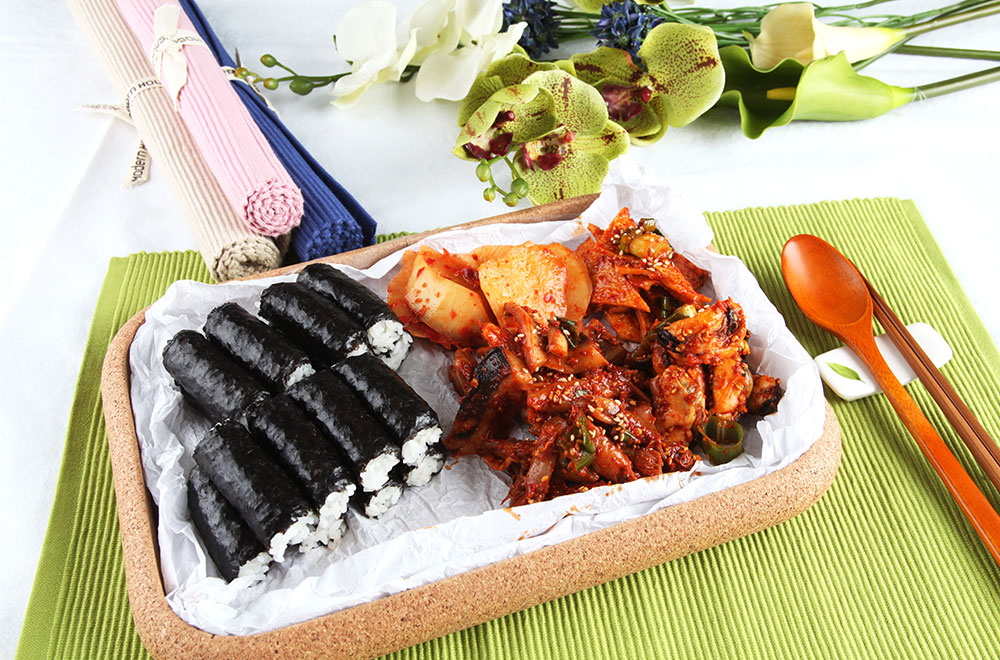
Chungmu Laver Rice Roll
One of Tongyeong's specialties, the laver rice roll, is made without any stuffing keeping it fresh for a long time. Instead, it is served with radish kimchi, a spicy octopus dish, and a mixed cuttlefish dish. Radish kimchi is made with salted anchovy, mixed with various seasonings
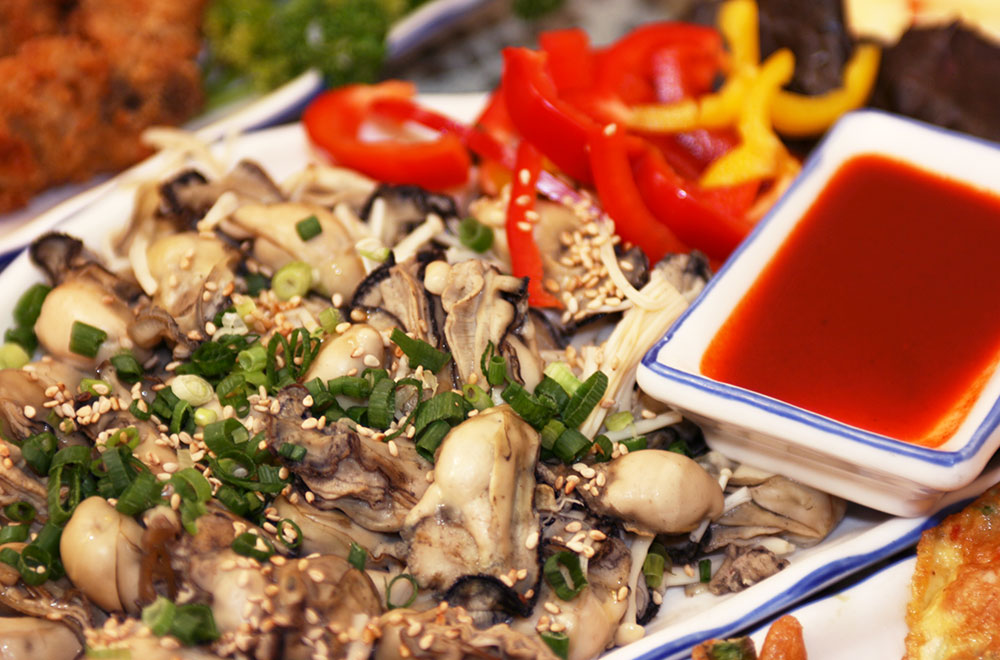
Oyster Cuisine
Enjoy fresh oyster just caught from the pure waters off the coast of Tongyeong. Various oyster cuisines, such as oyster rice, oyster stew, grilled oysters, steamed oysters, roasted oysters and raw oysters, are the health cuisine rich in Vitamin A, B, C, D, iron and miner
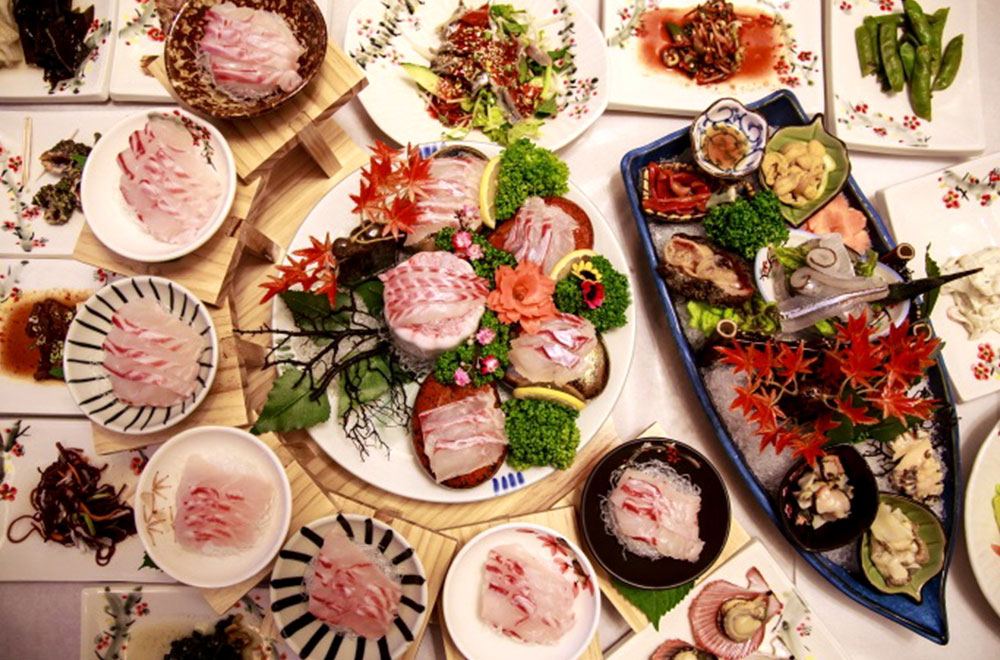
Sliced Raw Fish
Fresh raw slices of black porgy, frog flounder, and mackerel are a delight for both raw-fish lovers or first-timers.
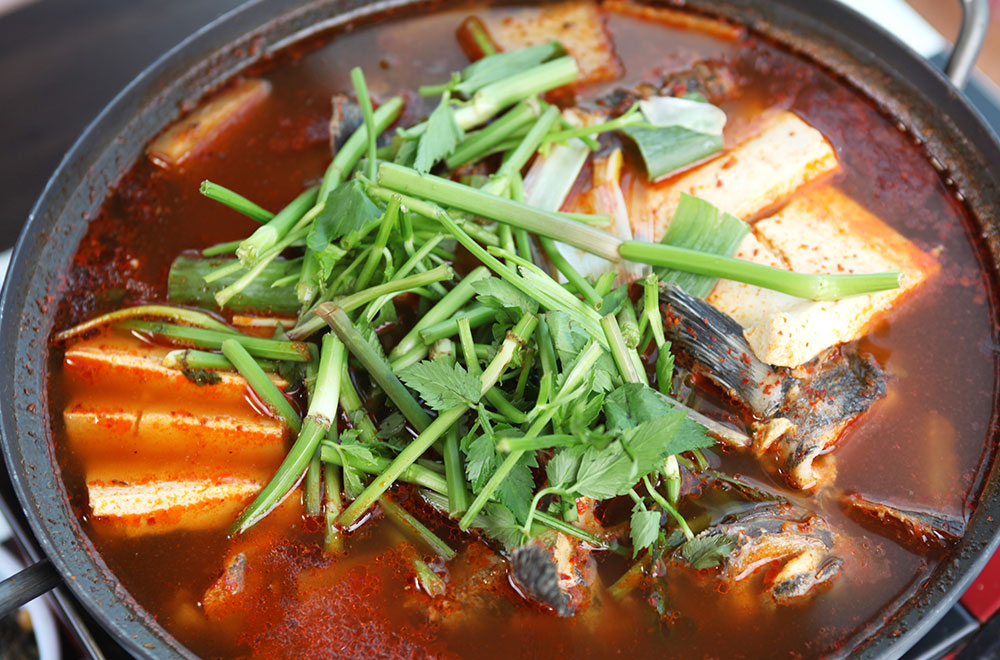
Spicy Fish Stew
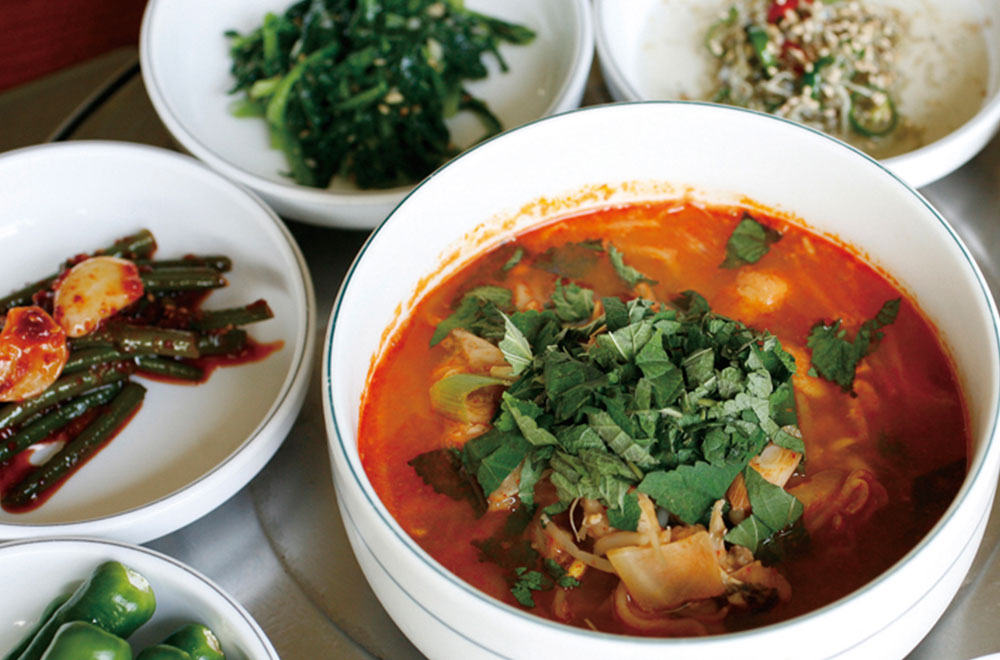
Rock cod, rock trout, and diverse fish from clean inshore water, boiled with special local recipes, makes for a very spicy and burning hot dish that really stimulates the appetite.
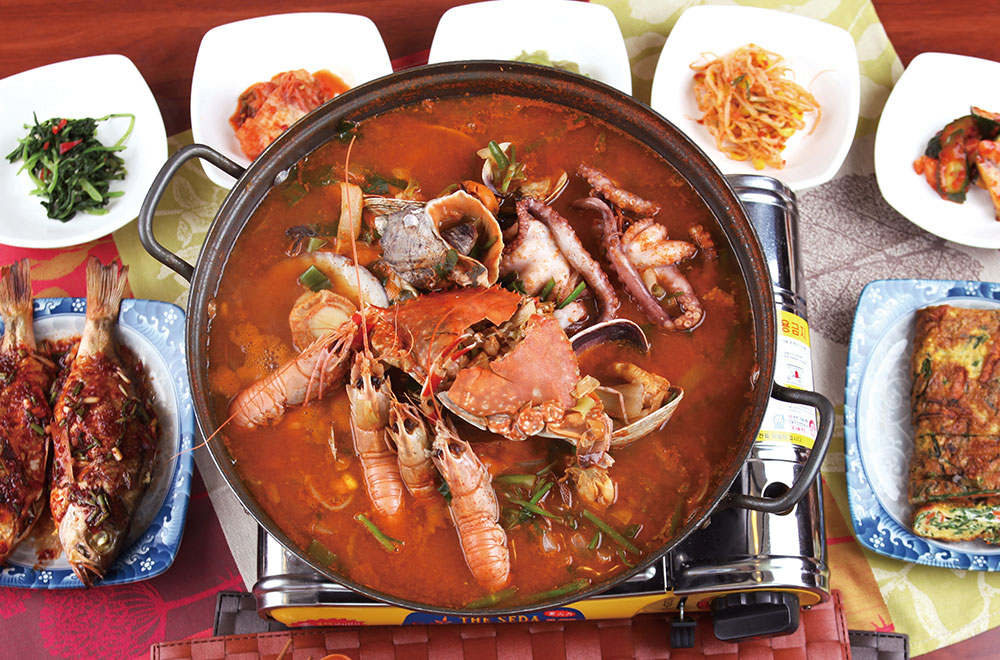
Haemultang
The spicy seafood stew is packed with a variety of seafood, so much so that it is not an exaggeration to say that it has everything caught from the sea. Blue crab, shrimp, abalone, and various clams are boiled in a broth made with natural ingredients for a refreshing taste.
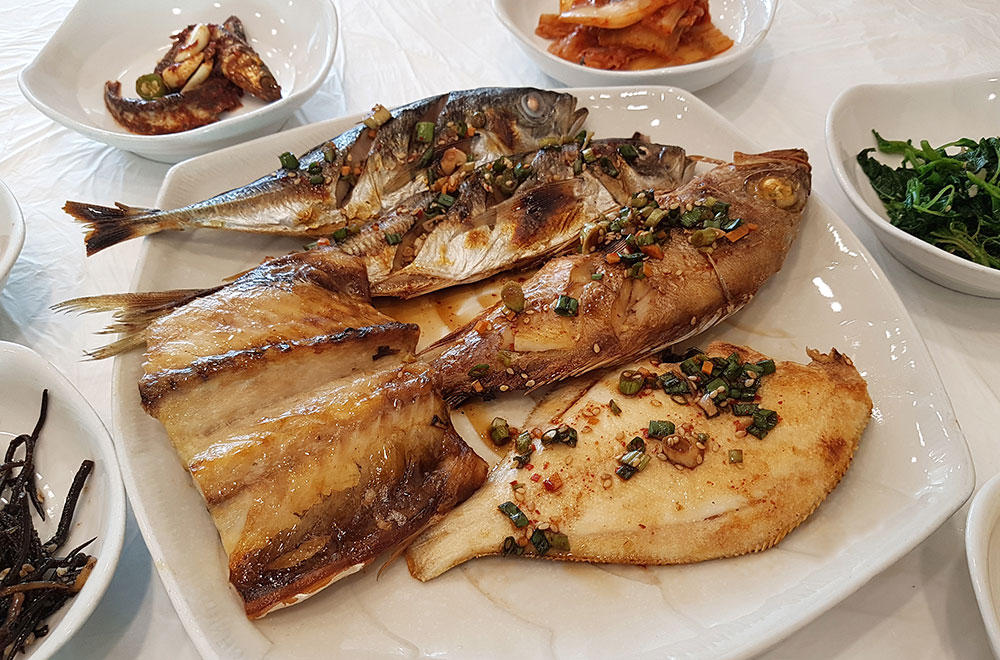
Grilled Fish
In Tongyeong, it is fun to dig into an assortment of grilled fish. The main ingredients are seasonal fish freshly caught in the sea of Tongyeong, like halibut, mackerel, rockfish, and butterfish.
The taste and flavor of grilled fish dipped in a salty marinade is incomparably good.
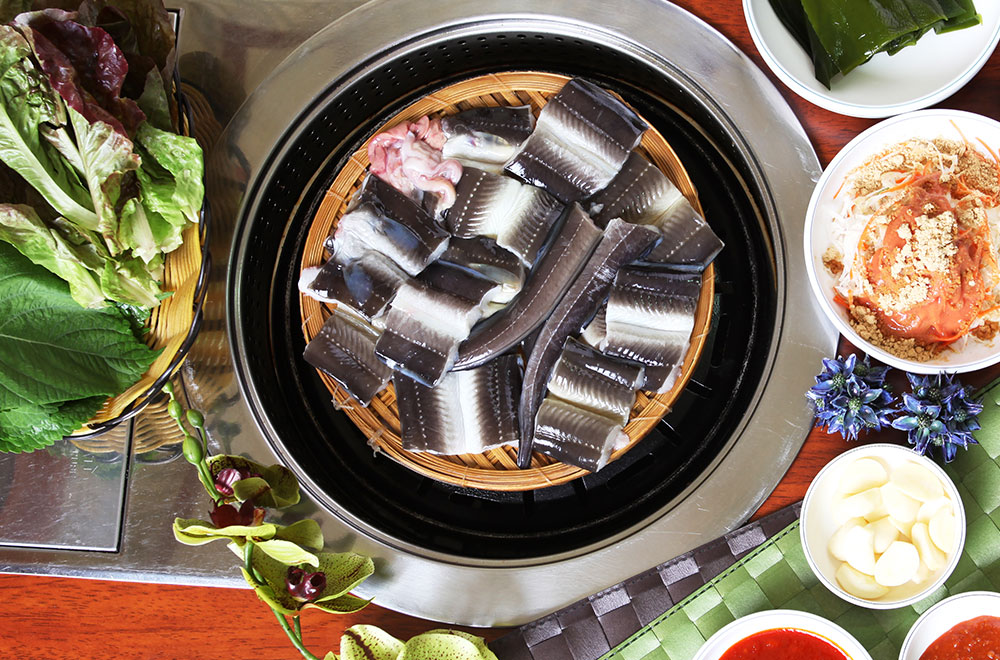
Grilled Sea Eels
Fresh eels netted from the Tongyeong inshore have been a favorite stamina food for their high protein and vitamin content.
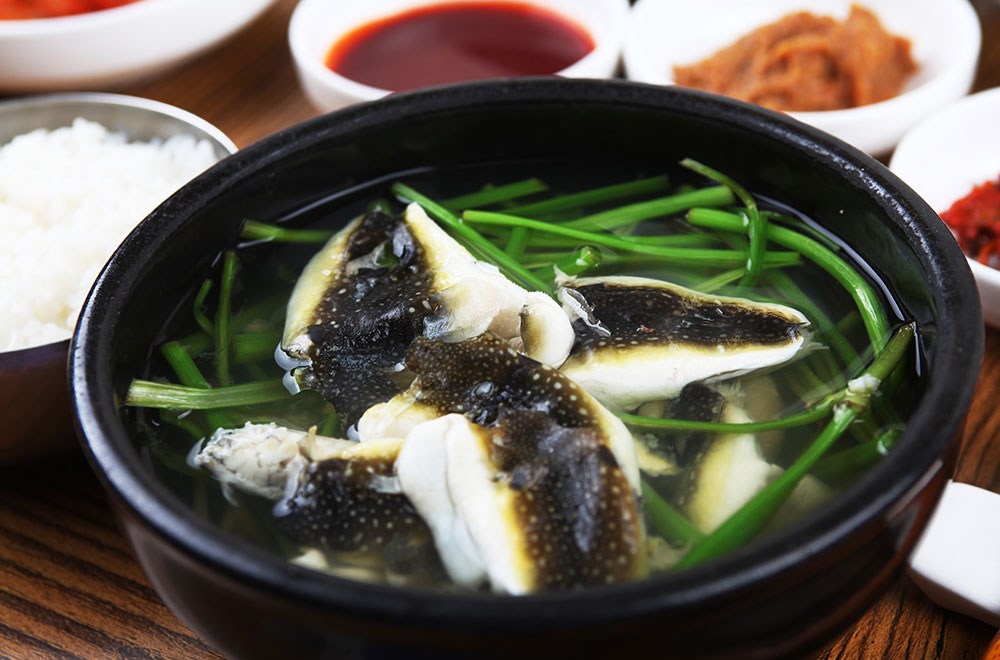
Blowfish Stew
The soup is made using blowfish caught from uncontaminated sea waters, water parsley and bean sprouts. Blowfish is rich in protein and vitamins, and is good for preventing high blood pressure, rheumatism, and diabetes. It is also a good hangover dish due to its detox effect on the liver.
Tongyeong Dajji
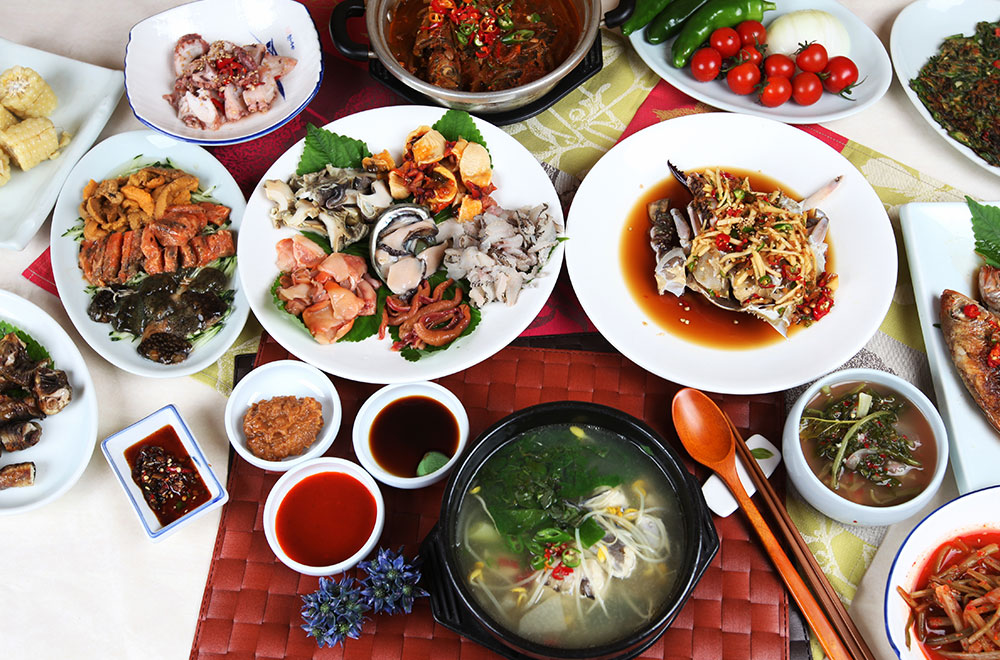
These restaurants go by different names: dajji, silvijip, or tongsuljip . The unique characteristic is that guests order alcohol and the restaurant serves an accompanying dish to go with it. There is no set menu and all dishes are made using what fresh ingredient is available on a given day. Any additional orders of alcohol come with rarer and more precious accompanying side dishes.
Ppaettegi-juk Porridge
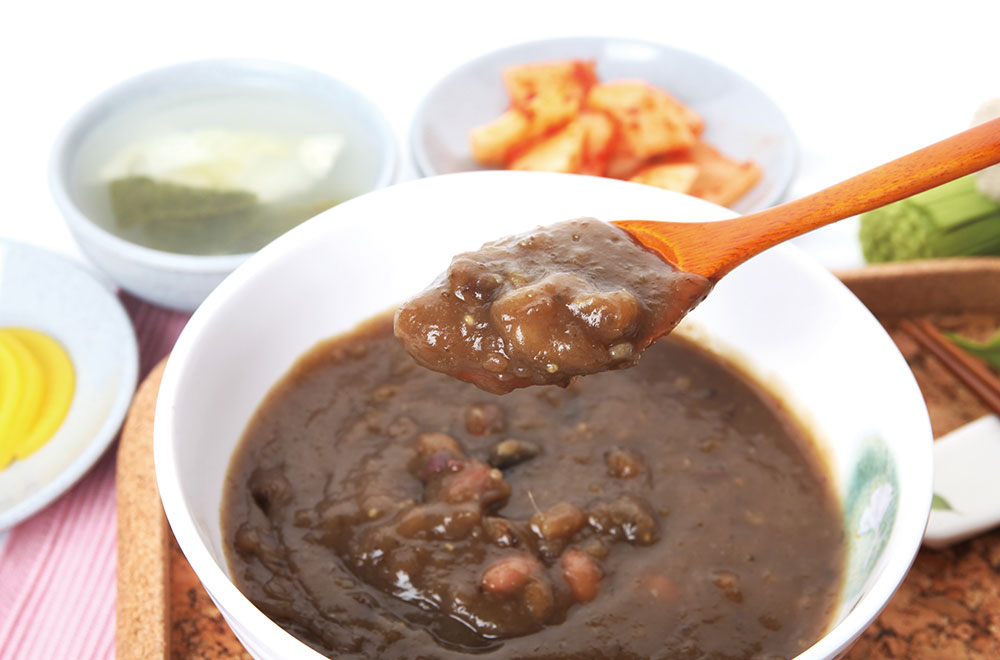
This porridge, a specialty of Tongyeong, is made of thinly-sliced and dried sweet potatoes. It is a simple and nutritious snack.
Dodari Ssukguk (Flounder and Mugwort Soup)
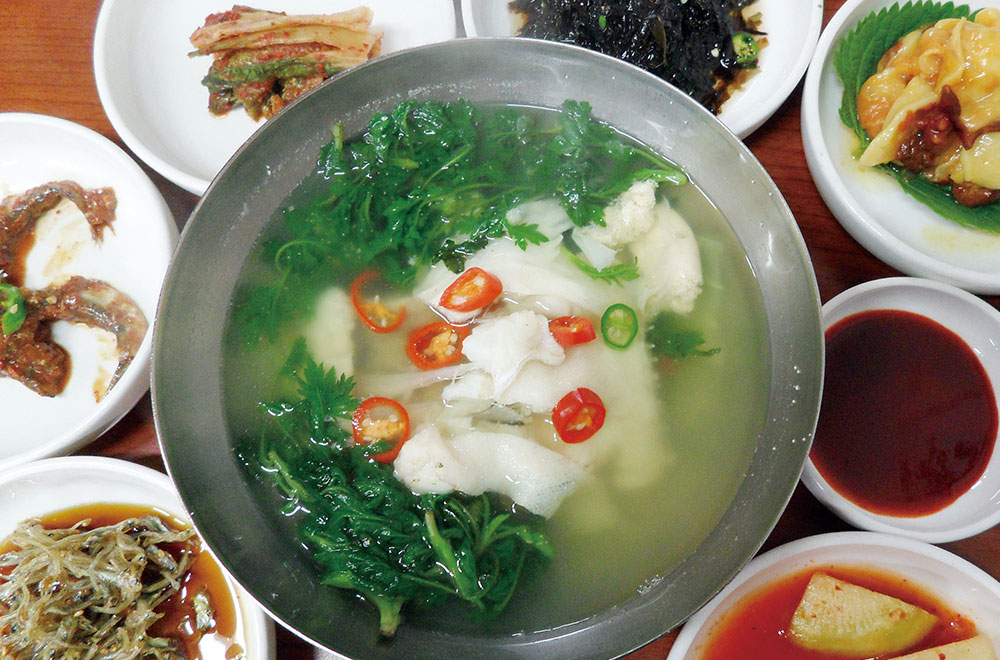
Made by boiling flounder and mugwort. Because the strong scent of the mugwort takes away the fishy taste of the flounder, no particular seasonings or condiments need to be added.
Hamohoe (Sliced Raw Pike Eel) and Hamotang (Pike Eel Soup)
Also referred to as sea gaetjangeo, wild pike eel, this is an exceptionally healthy summer food. Summer eel is especially good to be eaten raw for the bones are very tender. Tongyeong pike eel is good as a soup, or sliced raw.
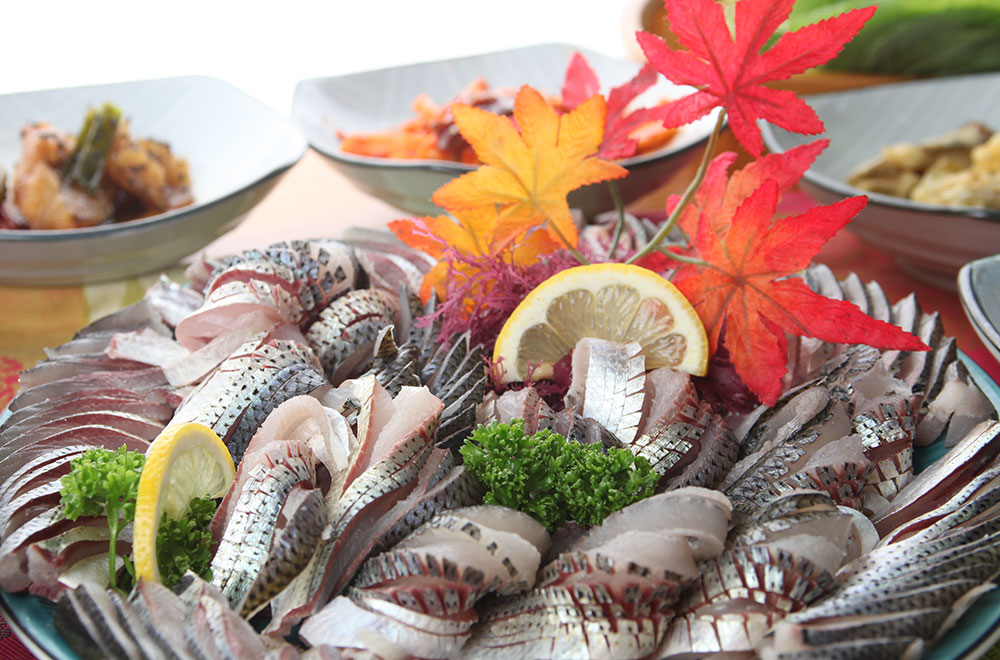
Jeoneohoe (Sliced Raw Gizzard)
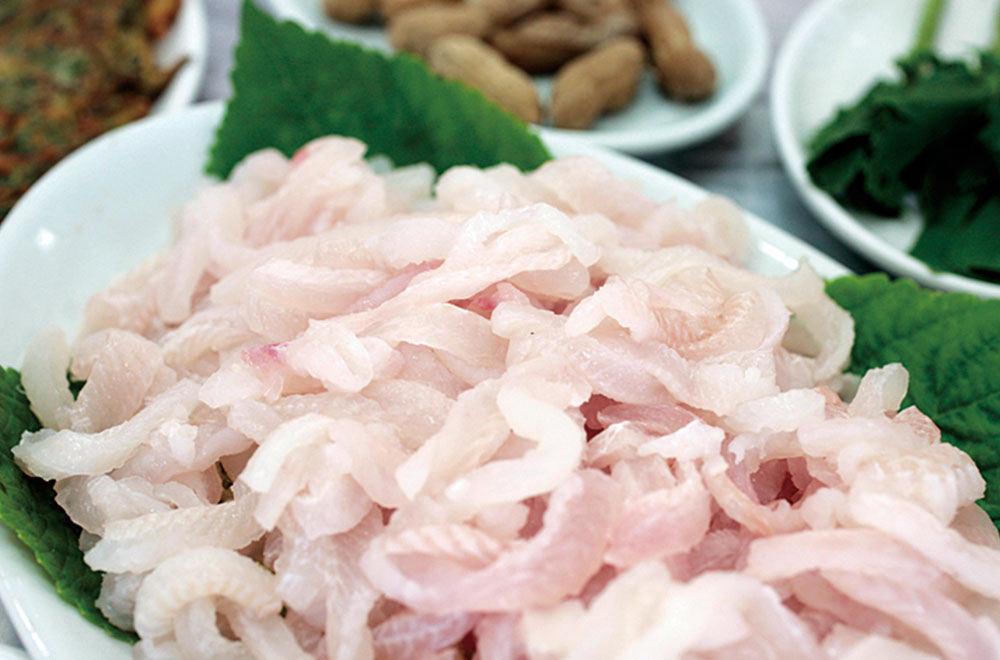
Fall gizzards are three times fattier than gizzards aught in the spring or winter. Sliced raw gizzards are chewier and tastier in the fall.
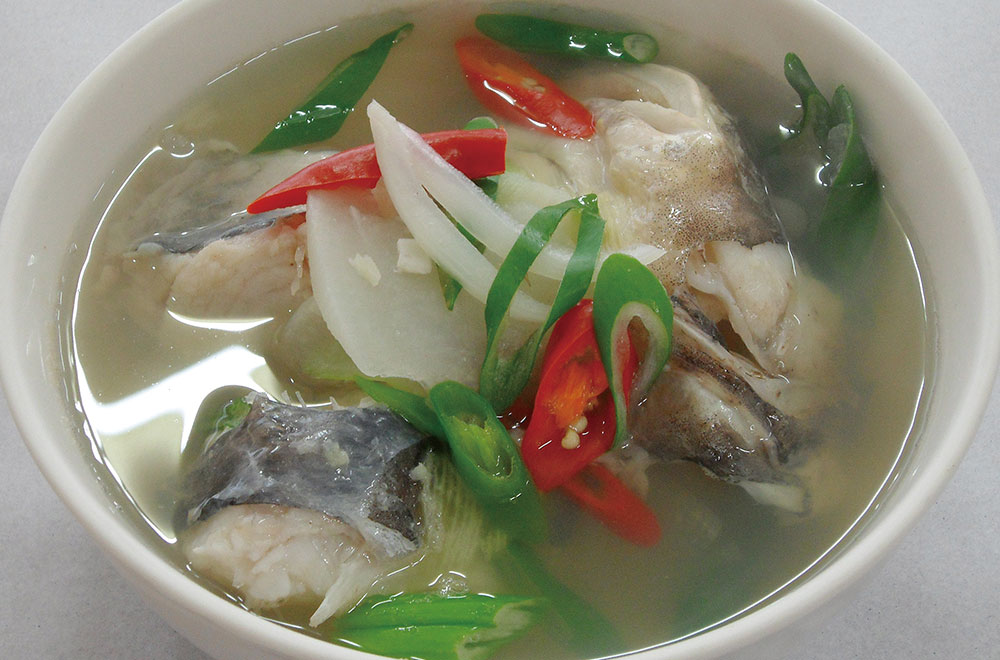
Mulmegitang (Catfish Soup)
Catfish is very tender, does not taste fishy and is not greasy, and therefore is ideal for hangover soup. Freshly caught winder catfish cooked with fresh vegetables, Korean chili powder and various other condiments taste so refreshing that you’ll have to come back for more.
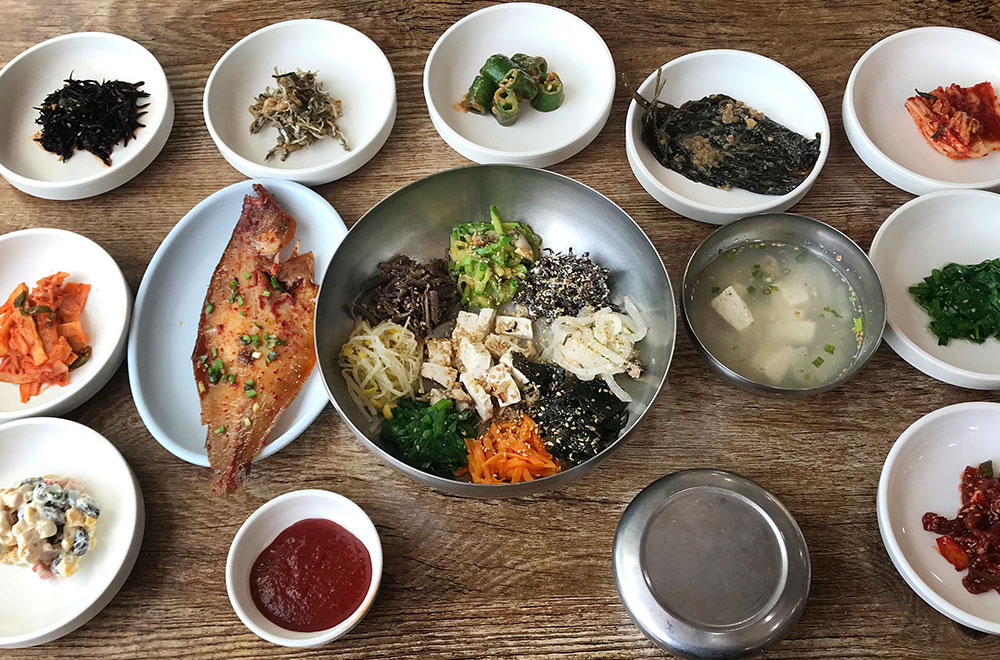
Tongyeong Bibimbap
Tongyeong bibimbap is a local dish of Tongyeong. It is topped with ten or more ingredients, including seaweeds and Siler divaricata. It is served with a clambased tofu soup.
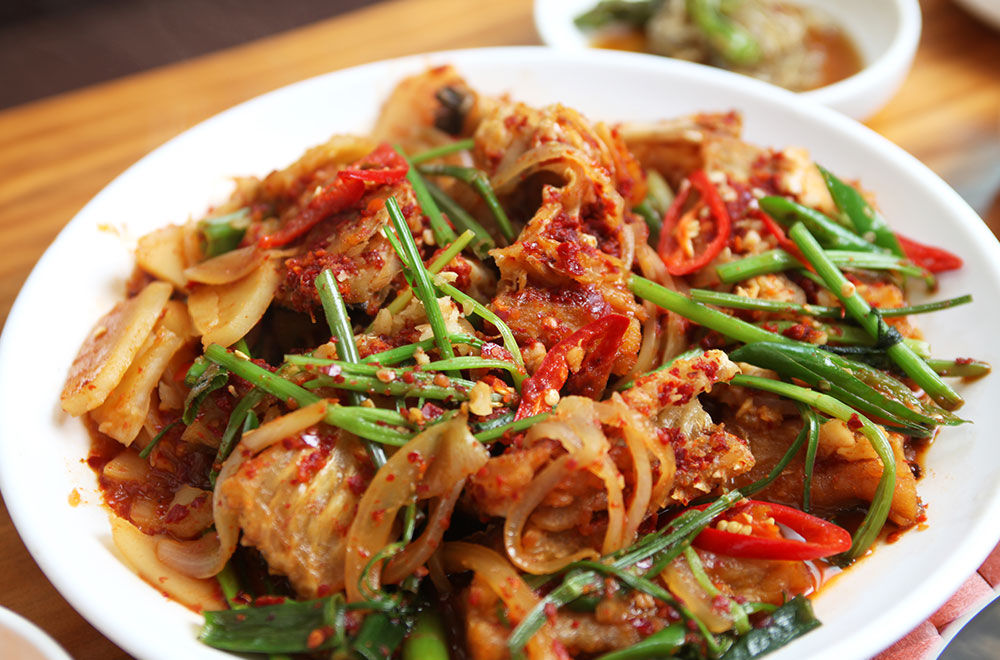
Steamed Dishes
Visitors can truly enjoy a variety of jjim dishes in Tongyeong. Most fish species caught in the sea can be made into a steam dish. Unlike other steamed dishes, the ones in Tongyeong only use fish.
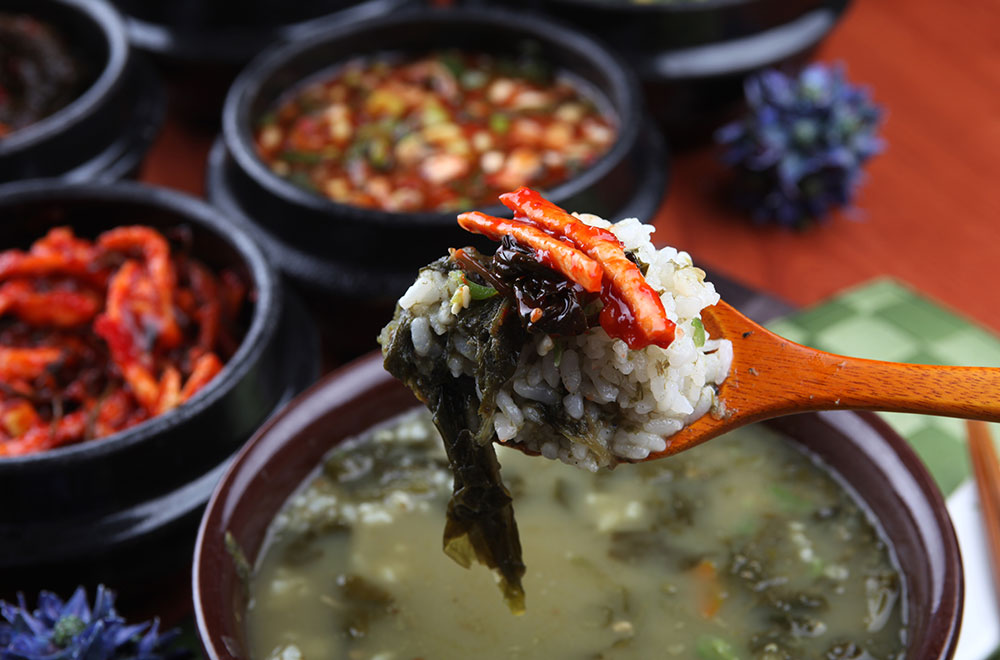
Sirakguk
Sirakguk is how Tongyeong people call the Korean soup with dried radish leaves. The broth is made with dried anchovies oreel, and seasoned with doenjang (soybean paste). Eaten as a light dish with a bowl of rice dumped into the soup, this dish is rich in protein and fiber and great for calming the stomach after a hangover.
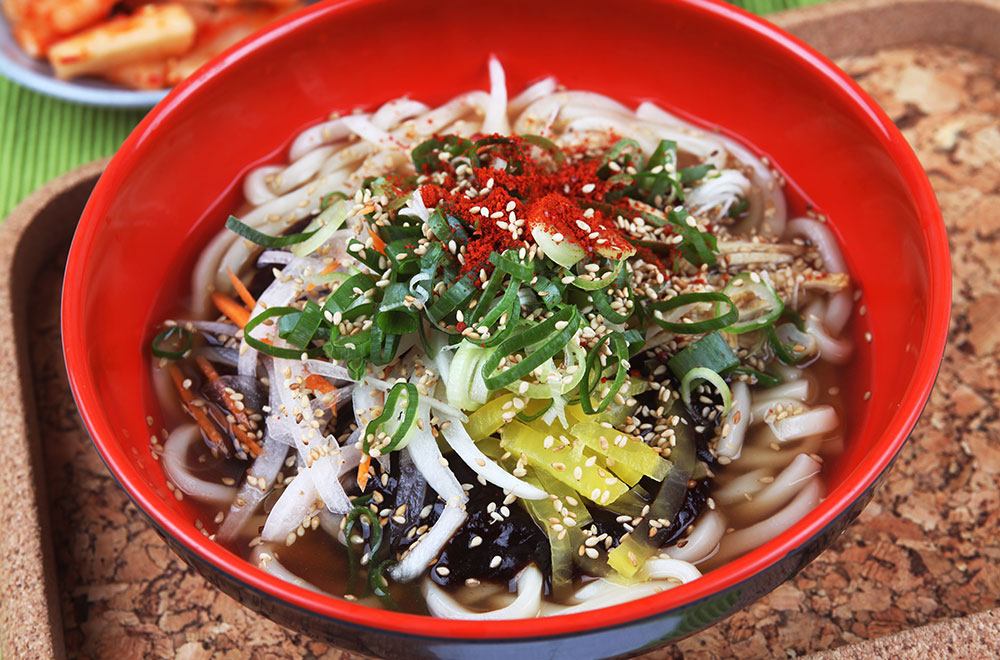
Tongyeong Ujja
This is a one and only dish in Korea. It is a bowl of udong noodles topped with jjajang (blackbean) sauce. Some say the name of this dish comes from the expression “Ujjano?” meaning “What to do (when you want to eat both udong noodles and jjajang)?” Thick noodles are covered slightly with udong broth and topped with jjajang sauce.
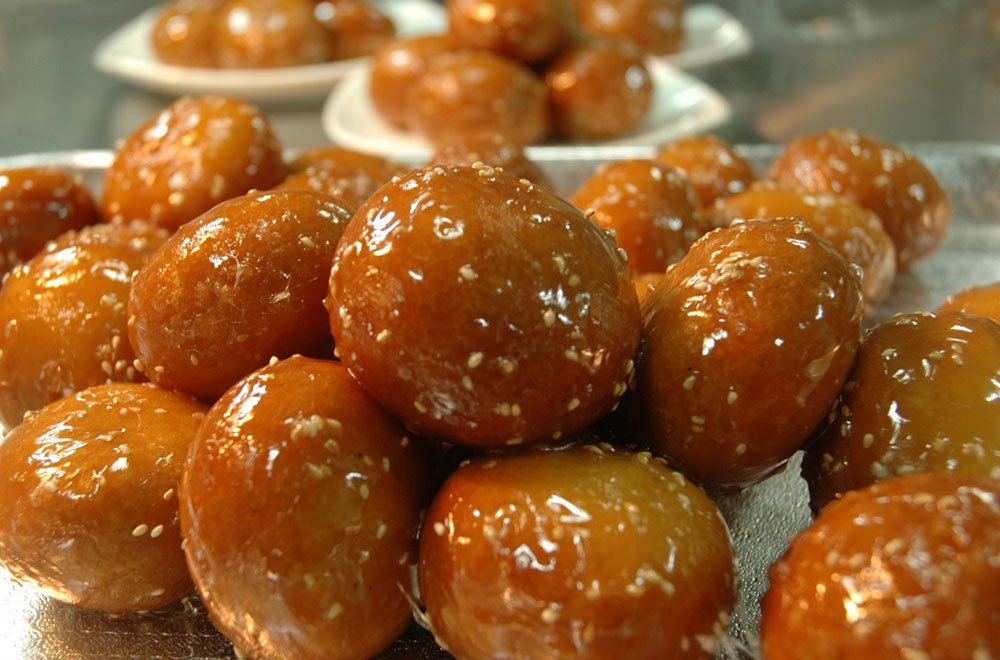
Honey Bread
To make this bread, thin slices of yellow and soft paste provide the wrapping for mashed red bean which is then fried in oil. Later, the bread is placed in a bamboo basket that absorbs excess oil and is mixed with syrup, sugar and sesame. The Honey Bread is a traditional foodstuff of Tongyeong; an area which boasts of a long culinary tradition of sweets known throughout the nation